
Clubs, Superintendents, and Who Really Runs the Weekend
For many people entering the dog show world, the hardest part is not the grooming, training, or even the competition. It’s understanding how the entire system fits together.
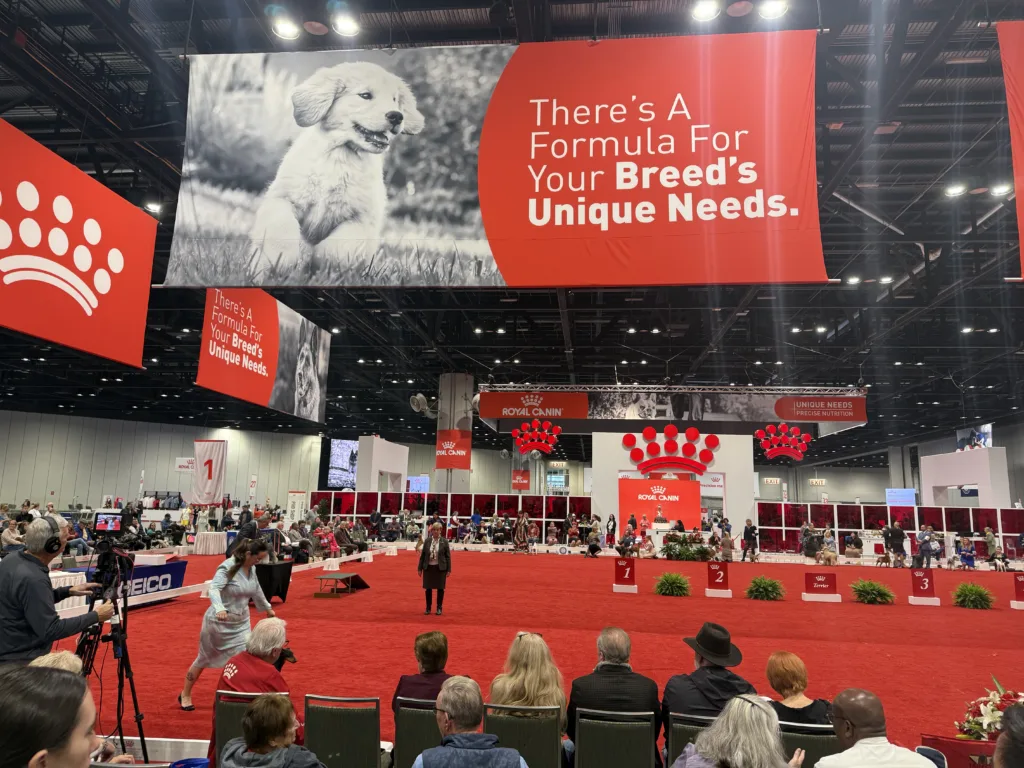
Dog shows can feel fragmented at first. Information lives in different places. Responsibilities are split across multiple organizations. Deadlines, rules, and procedures are rarely explained in one clear place. Most exhibitors learn by watching, asking questions, and slowly piecing things together over time.
That confusion is not a flaw in the sport. It’s the result of a structure that has evolved over decades.
Here’s how it actually works.
The role of kennel clubs
At the heart of every dog show is a club.
Local all-breed kennel clubs and specialty breed clubs are the ones who apply to hold shows. They are responsible for securing the venue, selecting judges, coordinating logistics, and ensuring the event meets the requirements of the sanctioning body.
Specialty clubs focus on a single breed or group and often hold standalone shows or events alongside larger weekends. All-breed clubs host shows where many breeds compete at once, usually grouped by classification.
These clubs are largely volunteer-run. Many members are exhibitors themselves, donating time and effort to keep the sport going.
What superintendents do
Superintendents are the operational backbone of dog shows.
They handle entries, produce premium lists, create judging programs, assign armband numbers, tabulate results, and submit official results and paperwork to the sanctioning body. They are also responsible for managing the data that flows before, during, and after a show weekend.
When you enter a show, you are almost always entering through a superintendent. That is why information is often spread across PDFs, websites, and schedules rather than living in one centralized system.
Different clubs work with different superintendents, which is why exhibitors quickly become familiar with names like Onofrio, MB-F, Jim Rau, or Jack Bradshaw. Each does essentially the same job, but through their own systems and formats.
Sanctioning bodies and registries
Sanctioning bodies provide the rules, titles, and structure under which shows operate.
In the United States, the most common registry for conformation events is the American Kennel Club. Others, like the United Kennel Club, host their own events with different formats and philosophies.
These organizations approve shows, define judging procedures, maintain official records and titles, and publish the rules that clubs and exhibitors must follow.
They do not run individual weekends. That responsibility stays with clubs and superintendents.
Understanding this division helps explain why results, points, rankings, and schedules can feel disconnected. Each part of the system has a specific role, and none of them were designed with a single, unified exhibitor interface in mind.
Why information feels scattered
When you look at a show weekend, you are really seeing several systems layered together.
The club organizes the event.
The superintendent manages entries and logistics.
The sanctioning body governs the rules and titles.
Exhibitors move between all of it in real time.
Most long-time exhibitors carry this knowledge intuitively. Newcomers often assume there is a central dashboard somewhere. There usually is not.
It also helps to understand the scale involved. In the United States alone, there are thousands of licensed dog show events held every year across conformation, performance, and companion sports. Each of those events is organized by a club, supported by a superintendent, and governed by a sanctioning body. At that volume, consistency is hard, and personal knowledge becomes the glue that holds everything together.
That gap is where confusion often lives, and it’s also where learning happens.
Why this matters
Understanding the ecosystem changes how you experience the sport.
It explains why deadlines matter so much.
It explains why judging programs look the way they do.
It explains why some weekends feel seamless and others feel chaotic.
A show weekend is also supported by a wider group of contributors. Photographers document wins and milestones. Vendors provide grooming supplies, equipment, and services exhibitors rely on. Hotels, venues, and local partners help make multi-day events possible. These pieces may feel peripheral, but together they shape the experience of the sport.
Most importantly, dog shows are built by people. Volunteers, exhibitors, club officers, judges, photographers, vendors, and staff who care deeply about preserving something they value.
Understanding how the system works does more than reduce confusion. It lowers the barrier to entry. When you can see how the pieces connect, the sport feels less closed and more accessible.
There is room for new exhibitors. There is room for new clubs. There is room for people who are still learning.
The structure may look complex from the outside, but at its core it is powered by participation.
ShowPoints was built with that in mind. Not to replace the system, but to help more exhibitors navigate it with clarity and confidence.
The easier it is to understand how the weekend works, the easier it becomes to step into it.